

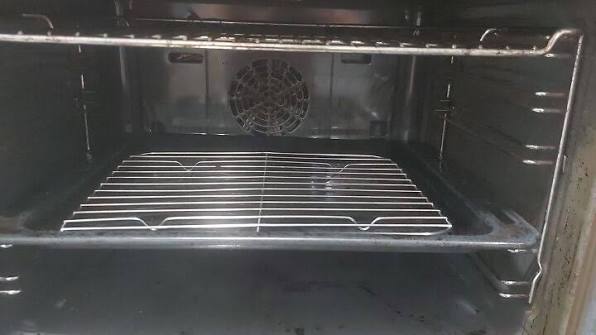

There’s a particular smell that tells you your oven needs attention. It usually appears when you’re cooking something perfectly innocent, then suddenly there’s a whiff of burnt grease, old food, or something that definitely wasn’t on tonight’s menu.
A dirty oven can make ordinary cooking smell much worse than it should. Each time the oven heats up, leftovers are heated again. Eventually, they start to burn, smoke, and release unpleasant odours.
The good news is that the smell is usually easy to trace. It is often sitting right there in the oven, waiting for another roasting tray to set it off.
Understand Why Heat Makes Oven Odours Worse
Heat does not simply make an existing smell stronger. It can also cause old food and grease to burn again.
Think about a small splash of gravy that lands on the oven floor. The first time it happens, you might barely notice. Leave it there through several more cooking sessions, though, and it can become a hard, dark patch. When the oven gets hot, that residue heats up too.
The same thing happens with cooking fat. Grease can collect around the oven cavity, racks, and other surfaces. Once it gets hot enough, it can produce a strong burnt smell. Crumbs can do the same thing, especially when they have been sitting around for a while.
This is why a relatively clean oven can smell fine while a neglected one can make your kitchen smell like something has gone very wrong with dinner.
Check for the Usual Sources of Bad Smells
Before reaching for a cleaning product, have a look inside the oven. You may find the culprit fairly quickly.
Check the bottom of the oven for burnt food, grease, and old spills. Look at the racks, too. Food residue can stick to them and release odours whenever they heat up.
It is also worth checking around the oven door. Grease and food particles can collect around the edges and become surprisingly stubborn.
If your oven has a fan, check the manufacturer’s instructions before attempting to clean around it. Some components should not be sprayed or soaked.
And if your oven suddenly smells strongly of gas, that is a different matter. Do not treat it as a cleaning issue. Turn the appliance off, ventilate the area if it is safe to do so, and follow the manufacturer’s safety guidance.
Know the Difference Between Food Smells and Faults
Not every strange oven smell means it needs a scrub.
A little smoke from a fresh spill is usually easy to explain. A persistent burning smell, electrical odour, or unusual smell that appears when the oven is clean could point to an appliance problem.
The type of oven can also affect what you notice. Gas ovens have combustion components that electric ovens do not, while electric ovens have heating elements that can collect food residue.
If you smell gas rather than burnt food or grease, do not try to solve the problem with cleaning products. A gas smell needs prompt attention from a suitably qualified professional.
For ordinary food and grease smells, however, cleaning is often the best place to start.
Clean the Oven Before the Smell Gets Worse
You do not need to wait until your oven starts smoking to clean it.
Regular cleaning removes the grease and food residue responsible for many unpleasant smells. It can also make the next deep clean much less of a battle. Nobody wants to spend their Saturday negotiating with a piece of lasagne that has become part of the oven’s architecture.
Start by allowing the oven to cool completely. Remove the racks and clean them separately using warm water and a suitable washing-up liquid or oven-safe cleaning product.
For the oven itself, choose a cleaner that is suitable for your appliance and follow the manufacturer’s instructions. Some ovens have special coatings or self-cleaning features that can be damaged by unsuitable products.
For light grime, a damp microfibre cloth may be enough. Heavier grease usually needs more time and the right cleaning product. Give the cleaner time to loosen the residue instead of attacking it immediately with an abrasive scrubber.
Once you’ve finished, wipe away all cleaning residue thoroughly. The oven should be clean, dry, and ready for use before you heat it again.
Deal With Grease and Burnt-On Food
Grease is one of the biggest contributors to that unpleasant burnt smell. Unfortunately, it is also very good at hanging around.
Fresh spills are much easier to remove than old ones, so wipe them up once the oven has cooled. For older residue, use an oven cleaner designed for the surface you are treating.
Avoid using metal scrapers or harsh abrasive tools unless the manufacturer specifically says they are suitable. Scratching the oven interior is a poor trade for removing a stubborn patch of gravy.
If you prefer a gentler approach, baking soda mixed with water can help loosen some light or moderate residue. Apply it to suitable surfaces, leave it to work, then wipe everything away carefully.
It may not shift years of baked-on grease in one go, but that is not a failure. Some oven messes have had a long career.
Ventilate the Kitchen While Cleaning
A freshly cleaned oven should not leave your kitchen smelling strongly of cleaning products.
When using a commercial oven cleaner, follow the label instructions and make sure the room is well ventilated. Open a window or door where appropriate, and wear gloves if the product recommends them.
Do not mix different cleaning products together. In particular, avoid experimenting with combinations of household chemicals simply because one product does not seem to be working quickly enough.
If you use a homemade cleaning method, rinse the surfaces properly afterwards. You want to remove both the grime and the cleaning mixture.
Good ventilation is also useful when you first use the oven after cleaning. If you notice an unusual smell or smoke that does not seem to be coming from leftover cleaning residue, switch the oven off and investigate before continuing to cook.
Prevent Spills From Becoming Smelly Residue
The easiest oven to clean is the one that has not been allowed to become a science experiment.
Use suitable baking trays and dishes that are large enough to contain sauces and cooking juices. If something does spill, clean it once the oven has cooled instead of letting it bake onto the surface during the next few uses.
You can also wipe the oven door and remove crumbs regularly. These small jobs take minutes and can save you from a much bigger cleaning session later.
An oven liner may also help with some spills, but check your appliance manufacturer’s instructions first. Not every liner is suitable for every oven.
And a word of caution: Never place an oven liner directly on the oven floor unless the manufacturer specifically says that it is safe. The goal is simple: catch mess before it turns into a smoky, burnt-on problem.
When Professional Oven Cleaning Makes Sense
Sometimes an oven is past the point where a quick wipe-down will make much difference.
If grease has built up across the interior, food is firmly baked onto the surfaces, or unpleasant smells keep returning after cleaning, a professional deep clean may be worthwhile.
Professional cleaners have the equipment and products needed to tackle stubborn oven grime without relying on endless scrubbing. This can be especially useful if you have moved into a property where the oven has clearly seen better days.
For households in the area, arranging oven cleaning in Croydon can take one of those unpleasant jobs off the list. You get a cleaner cooking appliance without spending an afternoon hunched over the oven door wondering where your life went.
Keep Your Oven Fresh Between Deep Cleans
A clean oven does not need constant attention. A little maintenance goes a long way.
Wipe up spills once the oven is cool. Remove crumbs from the bottom regularly, and give the racks a proper clean when they start collecting grease. Keep an eye on the oven door, too, as residue can build up around the edges without being immediately obvious.
How often you need a deeper clean depends on how much you use the oven and what you cook. Frequent roasting, grilling, and dishes that bubble over will naturally create more mess than occasional baking.
The important thing is not to wait until the oven starts producing its own weather system.
Conclusion
Dirty ovens smell worse because old food, grease, and spills can heat up again and again. Eventually, that residue burns and releases unpleasant odours into your kitchen.
Regular cleaning helps prevent the problem, while quick attention to spills stops them from becoming stubborn, baked-on grime. Always use products that are suitable for your appliance, follow the manufacturer’s instructions, and take unusual smells seriously.
If your oven has accumulated more grease than you would care to investigate, professional oven cleaning in Croydon can give it a much-needed reset. Your next roast should smell like dinner, not like the oven is trying to remember everything you’ve cooked since 2019.

