

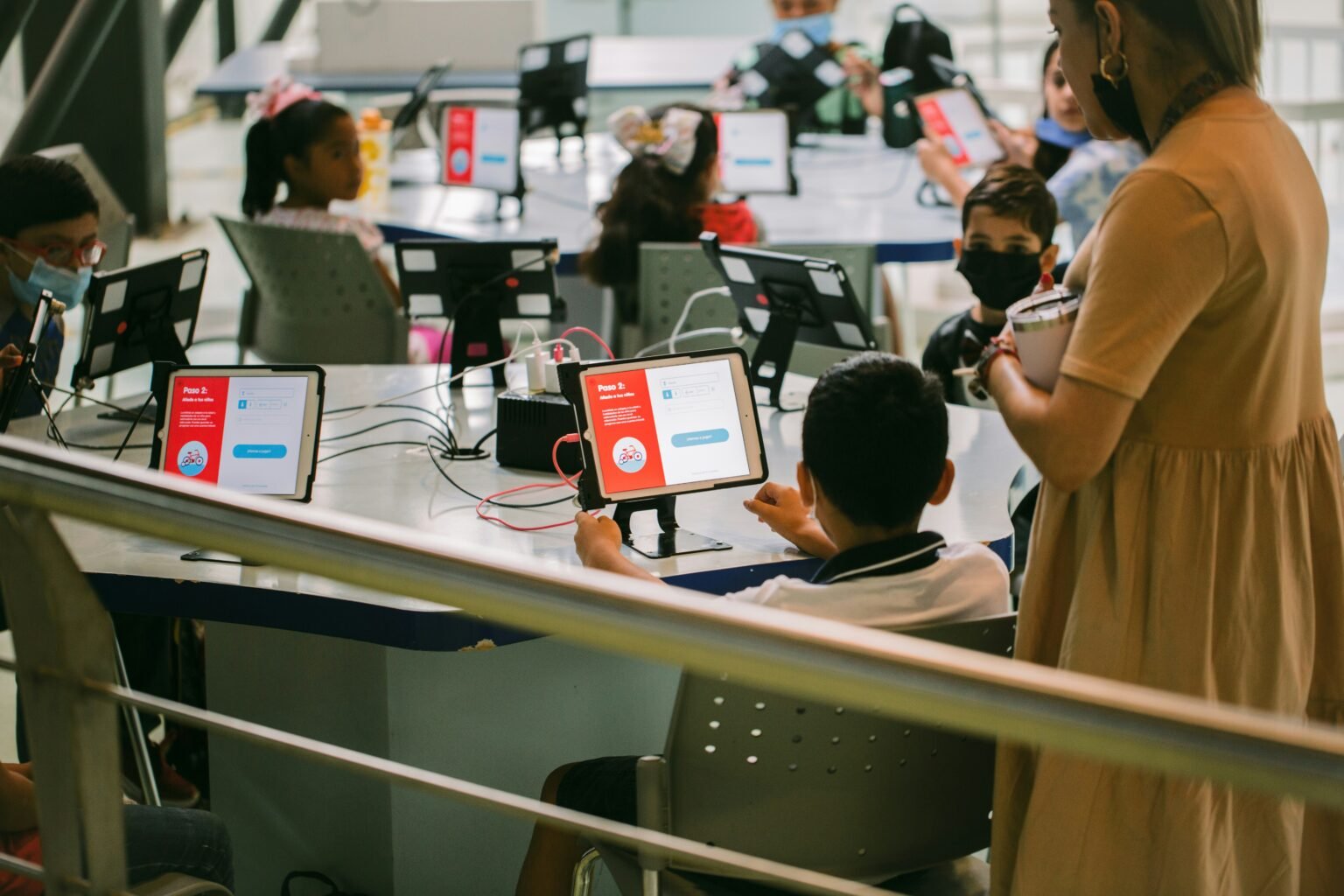

Introduction: Embracing the Digital Transformation
In recent years, the education sector has experienced a profound transformation driven by rapid technological advancements. The digital transformation in education has become imperative as traditional teaching methods are increasingly complemented or even replaced by innovative approaches that leverage technology. This evolution reflects broader societal changes, highlighting the necessity for educators, institutions, and students alike to adapt to an ever-evolving digital landscape.
One of the most significant shifts in this transformation is the transition from conventional classroom settings to more dynamic and interactive learning environments. The integration of digital tools such as online platforms, virtual reality, and artificial intelligence has opened new avenues for personalized learning experiences, allowing educators to tailor their approaches to meet the diverse needs of their students. This has created an opportunity for a more engaged and interactive educational experience, where information is readily accessible and learning can occur anytime and anywhere.
Furthermore, the global pandemic has acted as a catalyst for this digital transformation, forcing educational institutions to rapidly adopt online learning solutions. As schools and universities pivoted to remote learning, they were compelled to rethink pedagogical strategies, embracing technology in ways they might have previously resisted. This shift not only highlighted the flexibility and potential of digital mediums but also brought to light the disparities in access to technology among students, which must be addressed to ensure equitable education for all.
Ultimately, embracing the digital transformation in education entails acknowledging both the opportunities and challenges that arise from this shift. As we delve into the future educational trends that are emerging from this transformation, it becomes clear that adaptability and innovation will be the cornerstones of successful educational practices going forward.
The Rise of Online Learning Platforms
In recent years, online learning platforms have rapidly gained traction, becoming a significant component of the educational landscape. Platforms such as Coursera, edX, and Khan Academy have proliferated, providing learners with access to a diverse array of courses and resources, often free of charge or at a fraction of the cost of traditional education. This democratization of knowledge is pivotal in a world where geographical constraints have previously hampered access to quality educational materials.
These online platforms have successfully broken down the barriers that once limited learners to their local institutions. By offering courses from renowned universities and experts across the globe, students can now engage with high-caliber educational content irrespective of their geographical location. This means that an individual in a remote village can learn from esteemed professors at Ivy League institutions, thus expanding their horizons and potential career opportunities.
Moreover, online learning platforms cater to diverse learning styles and needs. For instance, they often incorporate various forms of media, including videos, podcasts, and interactive quizzes, allowing learners to engage with the material in ways that suit them best. Additionally, these platforms frequently provide opportunities for peer interaction and community support, mirroring the collaborative environment of traditional classrooms. This flexibility is particularly beneficial for adult learners and working professionals who require adaptable learning schedules to accommodate their personal and professional commitments.
As education continues to evolve in this digital age, the rise of online learning platforms signifies a transformative shift. This evolution not only enhances the accessibility of education but also promotes a culture of lifelong learning. By leveraging technology, these platforms are paving the way for individuals to pursue their educational goals and expand their knowledge base, fundamentally altering how education is perceived and delivered in the 21st century.
Integrating Artificial Intelligence in Education
Artificial intelligence (AI) is increasingly playing a pivotal role in transforming traditional educational paradigms by facilitating personalized learning experiences. In a contemporary classroom, AI-driven tools are employed to assist educators in effectively monitoring student progress and tailoring educational resources according to individual needs. This technological integration not only enhances the teaching process but also helps students engage more deeply with the subject matter.
One significant application of AI in education involves the creation of adaptive learning platforms. These platforms utilize algorithms to analyze various data points related to students’ learning styles, interests, and performance. This real-time analysis allows educators to identify areas where students may be struggling and offer customized resources or interventions accordingly. For instance, if a student demonstrates a particular difficulty with mathematics, AI tools can recommend targeted exercises to strengthen those skills without needing extensive manual oversight from educators.
Moreover, AI can assist in automating administrative tasks, freeing up valuable time for teachers to focus more on instruction and student engagement. This could include grading assignments or assessing participation, tasks that can become cumbersome when handled manually. The efficiency gained through AI technologies ensures that educators can dedicate more attention to mentoring and guiding students, ultimately fostering a more enriched educational environment.
As technology continues to evolve, it is expected that AI will become even more intricately woven into the educational fabric, providing unparalleled support for both educators and learners. The capacity of AI to create a customized learning experience underscores its significance in modern education, paving the way for a future where learning can be as unique as each individual student.
The Importance of Digital Literacy
In the rapidly evolving landscape of the 21st century, digital literacy has emerged as a foundational skill essential for success in both personal and professional spheres. As technology continues to influence almost every aspect of our lives, understanding how to effectively navigate digital environments is paramount. Digital literacy encompasses a broad range of competencies, including the ability to use technology tools, critically evaluate online information, and communicate effectively across various digital platforms. These competencies enable individuals to adapt to changes and take advantage of new opportunities.
Educational institutions recognize this pressing need and are actively incorporating digital literacy into their curricula. Schools and universities are designing programs that not only teach students how to use technology but also emphasize critical thinking skills to assess information credibility. Lessons on cybersecurity, digital ethics, and online communication etiquette are becoming integral to education at all levels. By focusing on these areas, educators equip students with the necessary skills to function in a technology-driven society.
Moreover, digital literacy is not merely a technical skill; it encompasses the ability to engage with digital content meaningfully. This engagement includes the capacity to create digital content, utilize collaborative tools, and participate in online communities responsibly. As such, enhancing digital literacy among students is vital not only for academic achievement but also for fostering active citizenship in a digital world. As educational practices evolve, it is crucial for both educators and students to remain committed to developing these skills, ensuring they can thrive in an increasingly interconnected society.
Virtual and Augmented Reality in Learning
In recent years, virtual reality (VR) and augmented reality (AR) have emerged as transformative tools in the realm of education. These technologies allow for immersive experiences that engage students like never before. By integrating VR and AR into the classroom, educators can create interactive environments where learners can explore concepts beyond traditional textbooks. For instance, through VR headsets, students can embark on virtual field trips to historical sites, enabling them to experience history in an impactful manner.
Augmented reality enhances learning by overlaying digital information onto the real world. For example, AR applications can bring anatomical structures to life when viewed through a smartphone or tablet. This visual augmentation helps students in subjects such as biology to understand complex structures with clarity, enhancing retention and comprehension. Similarly, AR applications are being utilized in subjects like mathematics, where interactive visualizations help students grasp abstract concepts.
The advantages of using VR and AR in education extend to increased engagement and motivation. Traditional teaching methods often struggle to maintain students’ attention, but immersive technologies create a captivating atmosphere. When students actively participate in their learning through exploration and interaction, they are more likely to retain information and develop critical thinking skills.
Educational institutions around the globe are beginning to adopt VR and AR technologies extensively, recognizing their potential to revolutionize learning experiences. In STEM fields, for instance, virtual laboratories allow students to conduct experiments safely and repeatedly, fostering a deeper understanding of scientific principles. Furthermore, soft skills such as collaboration can be developed through virtual teamwork experiences.
As educational technology continues to advance, the integration of VR and AR into curricula promises to make learning not only more engaging but also more effective. By embracing these innovative technologies, educators can pave the way for a dynamic educational future, preparing students for the complexities of a digital world.
The Role of Educators in a Digital Era
In the ever-evolving landscape of education, the role of educators has undergone significant transformations, particularly with the advent of digital learning environments. Teachers no longer serve solely as providers of information; instead, they have become facilitators of learning, guiding students through the complexities of the digital world. This shift demands that educators adapt their teaching styles to meet the diverse needs of learners who are increasingly exposed to technology from an early age.
To effectively engage students, educators must integrate technology into their teaching practices. This involves utilizing digital tools and resources that not only enhance the learning experience but also prepare students for future challenges. For instance, incorporating interactive platforms and collaborative software can foster a more engaging and participatory classroom environment. As a result, students can take charge of their learning, developing critical skills such as problem-solving, creativity, and digital literacy.
Moreover, educators must embrace lifelong learning themselves, staying abreast of the latest technological advancements and pedagogical approaches. By honing their digital competencies, teachers can model effective learning behaviors and inspire students to explore and innovate. This continuous professional development is crucial in ensuring that educators feel confident in employing new tools and methods, ultimately creating a dynamic and flexible learning atmosphere.
In this digital era, the relationship between educators and students is more collaborative than ever. While technology aids in the delivery of content, the educator’s role as a mentor remains paramount. Teachers facilitate discussions, encourage critical thinking, and provide personalized feedback that nurtures individual growth. Thus, adapting to a digital learning environment not only transforms teaching practices but also enriches the overall educational experience for both students and educators alike.
Challenges of Digital Education
Digital education presents numerous advantages, yet it is not without its challenges. One of the foremost issues is equity in access to technology. Disparities in access to devices and reliable internet connectivity result in a significant digital divide, where some students are left behind due to socioeconomic factors. This gap undermines the potential for equal opportunities in education, particularly in underserved communities. Addressing this inequity requires collaborative efforts from governmental and non-governmental organizations to provide infrastructure, resources, and support to ensure all students have the tools necessary for digital learning.
Another prominent challenge is related to cybersecurity concerns. With an increase in online learning platforms, the risk of cyber threats also grows. Educational institutions must prioritize the safety of their digital environments to protect sensitive student information and maintain trust in their programs. Implementing robust cybersecurity measures, alongside educating students and staff about safe online practices, is essential in combating these risks.
Furthermore, the digital divide is not solely a matter of access but also encompasses variances in digital literacy. Some individuals may struggle to navigate new technologies effectively, inhibiting their learning experience. To tackle this, educational systems should integrate training programs to enhance digital skills among both educators and learners. These initiatives can empower individuals to confidently engage in a digital learning landscape.
In conclusion, while the transition to digital education is fraught with challenges, proactive strategies aimed at enhancing technological access, cybersecurity, and digital literacy can significantly mitigate these barriers. The future of education relies on our ability to confront these issues, fostering a more inclusive learning environment for all students.
Future Skills: Preparing Students for Tomorrow’s Workforce
The rapid advancement of technology has significantly reshaped the landscape of employment, leading to a growing demand for a diverse set of skills in the workforce of the future. As industries evolve, it becomes imperative for educational systems to adapt and equip students with the competencies required for success in a digital economy. This means more than just integrating technology into the classroom; it requires a comprehensive approach to develop critical thinking, creativity, collaboration, and digital literacy.
Essential skills for the future workforce will include a strong foundation in digital literacy, enabling students to navigate and utilize digital tools efficiently. As AI, data analytics, and other emerging technologies become increasingly prevalent, understanding how to work with these tools will separate candidates in the job market. Furthermore, fostering problem-solving abilities will empower students to tackle complex challenges innovatively, enhancing their adaptability in various roles.
Collaboration is another pillar of future skills, as the digital marketplace often emphasizes teamwork across geographical boundaries. Educational institutions must promote collaborative learning experiences that simulate real-world working environments. By encouraging group projects and peer-to-peer mentoring, students will become accustomed to working with diverse teams, an essential skill for future employment.
Moreover, creativity is a critical asset in an automated world. As many routine tasks become automated, human creativity will drive innovation and differentiation in products and services. Incorporating creativity into curricula through arts, design, and open-ended problem solving will better prepare students for roles that require innovative thinking.
In summary, to adequately prepare students for the workforce of tomorrow, education systems must focus on enhancing digital literacy, supporting collaboration, and encouraging creativity. This strategic approach to skill development will ultimately strengthen the capability of future generations in navigating an increasingly digital world.
Conclusion: Shaping the Future of Education
As we navigate the evolving landscape of education in a digital world, it is imperative to reflect on the key points discussed throughout this blog post. The integration of digital technology in educational practices presents both challenges and opportunities. To fully embrace this transformation, it is essential for all stakeholders—educators, administrators, policymakers, and learners—to collaborate and innovate.
Educational institutions must prioritize adapting their curricula to include digital literacy and ensure that students are equipped with the necessary skills to thrive in an increasingly digital society. Moreover, fostering an environment that promotes inclusivity and accessibility is crucial. By embracing diverse teaching methods, educators can cater to varying learning preferences and ensure equitable access to educational resources.
Furthermore, investing in professional development for teachers and administrative staff is vital. They must be well-versed in the latest technologies and pedagogical approaches to effectively guide students in their learning journeys. This includes utilizing data analytics to personalize education, thereby enhancing student engagement and performance.
Ultimately, the successful integration of digital technology into education relies on the collective efforts of all stakeholders. By fostering a culture of continuous improvement and innovation, we can shape an educational landscape that not only meets the needs of current learners but also prepares future generations for success in a digital world. The future of education is not just about technology; it is about transforming the learning experience to be more inclusive, engaging, and effective for all.

