

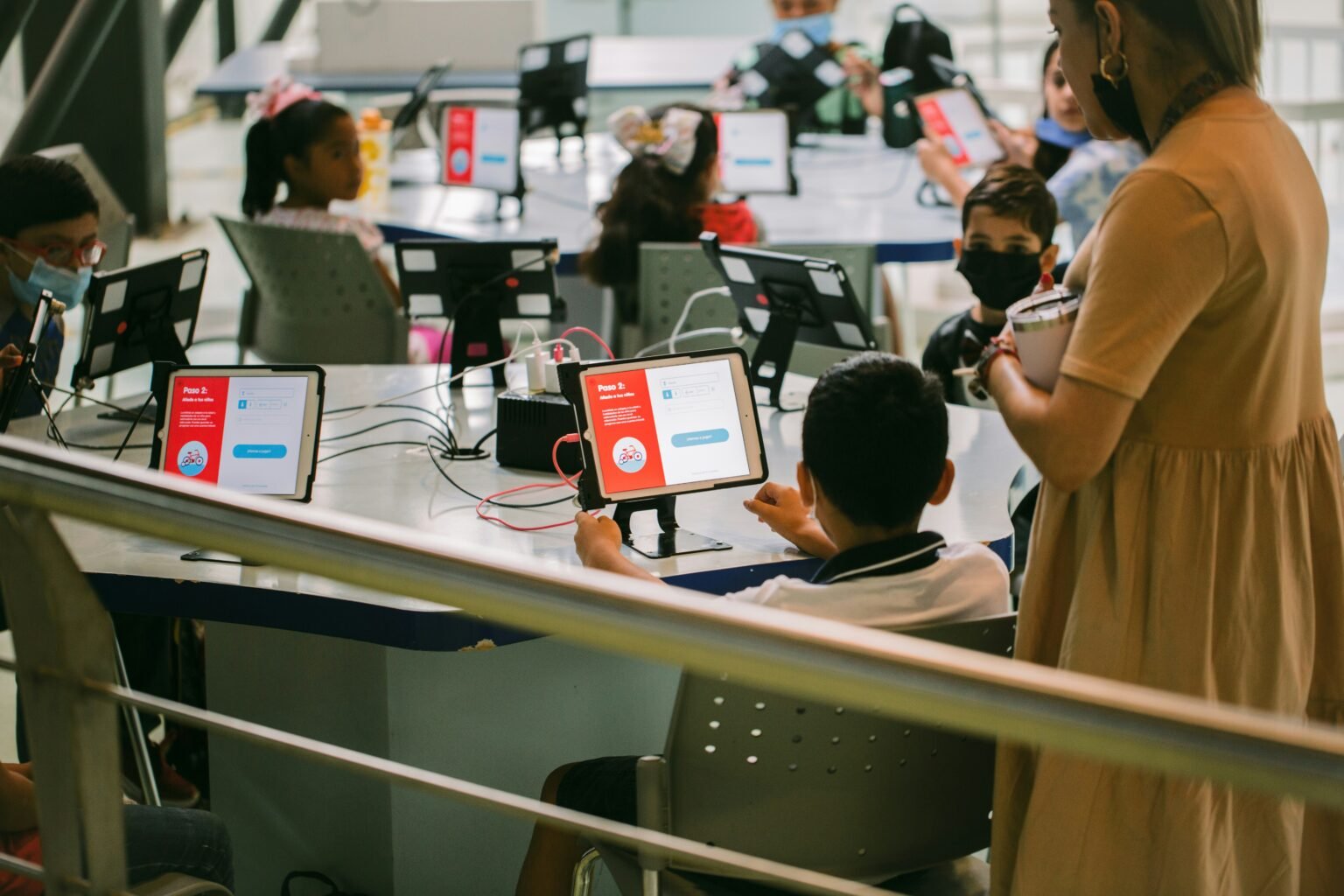

Introduction to Education Technology Trends
Education Technology, commonly known as EdTech, encompasses the integration of technology into the educational framework, influencing how knowledge is imparted and acquired. In recent years, the significance of EdTech has surged, particularly as digital landscapes evolve and educational institutions adapt to a more technologically oriented society. This growth marks a pivotal shift in the learning environment, where traditional methodologies are being complemented and, in some cases, replaced by innovative solutions.
The incorporation of technology into education is not merely a passing trend; it represents a fundamental reformation of pedagogical practices. The use of digital tools, such as Learning Management Systems (LMS), virtual classrooms, and educational apps, transforms how educators deliver content and engage with students. As such, the teacher-student dynamic evolves toward a more interactive and personalized learning experience. This growing emphasis on student engagement fosters a collaborative atmosphere conducive to the development of essential critical thinking and problem-solving skills.
Moreover, the impact of current EdTech trends on educational outcomes cannot be underestimated. These advancements facilitate differentiated instruction, allowing educators to tailor their approaches based on individual learning styles and needs, thereby increasing accessibility and participation among diverse student populations. Additionally, the use of data analytics within educational technologies enables institutions to monitor student progress actively and make informed decisions to improve learning pathways.
As we delve deeper into the latest trends transforming the educational landscape, it is crucial to understand how these technological innovations not only reshape the roles of students and teachers but also redefine the structure of education itself. The forthcoming sections will explore the multifaceted nature of EdTech, illustrating its critical role in crafting an adaptive and forward-thinking educational framework.
Artificial Intelligence in Education
Artificial Intelligence (AI) is rapidly transforming the educational landscape, offering innovative solutions and enhancing the learning experience for students and educators alike. One of the most significant applications of AI in education is the development of personalized learning experiences. By utilizing AI algorithms, educational platforms can analyze individual student performance data to tailor content, pacing, and assessments that meet their unique learning needs. This adaptability encourages enhanced engagement and improves academic outcomes.
Moreover, intelligent tutoring systems (ITS), powered by AI, provide students with immediate feedback, allowing for a more interactive and responsive learning environment. These systems can simulate one-on-one tutoring by offering explanations, answering questions, and guiding students through complex subjects at their own pace. Research has shown that such personalized tutoring can lead to significant improvements in student understanding and retention.
Beyond student-facing applications, AI also plays a crucial role in enhancing administrative efficiency. Educational institutions increasingly use AI-driven tools for automating routine tasks, such as grading assignments, managing schedules, and even analyzing student data for insights into performance trends. This streamlining allows educators to focus more on teaching and fostering student development rather than engaging in time-consuming administrative duties.
However, the integration of AI into classrooms does not come without its challenges. Concerns about data privacy, the potential for bias in AI algorithms, and the varying levels of technology access among students can complicate implementation efforts. Despite these challenges, numerous case studies have highlighted the positive impact of AI on student success. For instance, schools that adopted AI-driven learning platforms reported increased student motivation and improved standardized test scores.
In conclusion, the role of artificial intelligence in education is multifaceted, offering personalized learning, efficient administrative processes, and the potential to enhance educational outcomes significantly. As we continue to explore and implement AI technologies, addressing the associated challenges will be crucial in shaping the future of education.
Gamification of Learning
Gamification, an innovative approach in education, integrates game design elements into learning experiences to enhance student engagement and motivation. By applying game mechanics—such as points, badges, leaderboards, and challenges—educators can transform traditional learning into an interactive and enjoyable endeavor. The essence of gamification lies in its ability to create a sense of achievement and progress, which can significantly improve knowledge retention.
One of the primary reasons gamification enhances learning experiences is that it fosters competition and collaboration among students. For instance, platforms like Kahoot! have successfully utilized gamified assessments that allow students to participate in quizzes in real-time. This format not only makes learning fun but also encourages peer interaction, as students compete for high scores and recognition. As they engage with content in a game-like format, their enthusiasm for the subject matter increases, leading to improved academic outcomes.
Another example includes the use of platforms like Classcraft, which turns the classroom into a role-playing game where students earn points for positive behaviors and academic accomplishments. This method has shown effectiveness in enhancing motivation and encouraging teamwork as students work together to achieve common goals. Such gamified environments allow learners to take ownership of their education, making them more invested in their academic journeys.
Research supports the efficacy of gamification, highlighting that students in gamified learning environments often demonstrate higher engagement levels and retain information longer. The power of gamification lies in its ability to harness intrinsic motivation, propelling students to participate actively and appreciate the learning process. Ultimately, as educational institutions continue to adopt this progressive approach, the future of learning is poised to be more dynamic and engaging than ever before.
The Rise of Mobile Learning
The advent of mobile technology has significantly reshaped various facets of education, giving rise to mobile learning, or m-learning. This innovative approach leverages mobile devices, such as smartphones and tablets, enabling learners to access educational content and resources from virtually anywhere. The rise of mobile learning has been driven by the proliferation of mobile devices, which are increasingly integrated into everyday life. As a result, students are now able to engage with educational material outside the traditional classroom setting.
One of the most compelling advantages of m-learning is its accessibility. Learning is no longer confined to the physical boundaries of a classroom; students can learn at their own pace and on their schedule. This flexibility caters to diverse learning styles and preferences, promoting a more personalized education experience. Furthermore, mobile learning is particularly beneficial for students in remote areas who may have limited access to educational institutions. With internet connectivity, students can utilize various platforms designed to facilitate learning on mobile devices.
There is a vast array of learning apps available today that cater to different educational needs, ranging from language learning to professional development. These applications engage learners through interactive content, quizzes, and collaborative tools. Educational institutions are increasingly recognizing this shift towards m-learning, prompting a reassessment of their teaching methodologies. Many schools and universities are enhancing their curriculum by integrating mobile-friendly resources and tools, ensuring that they remain relevant in this digital age.
The impact of mobile learning on student outcomes is significant; studies indicate that m-learning can enhance student engagement and retention. By providing immediate access to resources and encouraging active participation through interactive features, mobile learning can create a more dynamic learning environment. As we continue to witness the evolution of mobile technology, it is clear that m-learning will play an integral role in shaping the future of education.
Virtual and Augmented Reality in Education
Virtual Reality (VR) and Augmented Reality (AR) are emerging technologies that offer innovative approaches to teaching and learning. By creating immersive experiences, these technologies engage students in ways traditional classrooms often cannot. In essence, VR places learners in a fully simulated environment, while AR overlays digital information onto the real world, enhancing the educational experience.
One compelling aspect of VR in education is its ability to offer hands-on experiences in complex and abstract subjects. For instance, medical students can utilize VR simulations to practice surgeries without risk, thereby gaining confidence and refining their skills before encountering real patients. Similarly, engineering students can explore intricate structures and systems in a controlled VR setting, allowing for a more profound understanding of physical concepts.
In recent years, numerous case studies have illustrated the practical application of AR in classrooms. For example, a high school science class used AR to visualize the human anatomy, where students could interact with 3D models of organs, thus enhancing their grasp of biological functions. This interactive learning process not only sparked students’ curiosity but also facilitated deeper retention of information.
The effectiveness of VR and AR in education is further illustrated by case studies highlighting improved student engagement and motivation. Educators have reported heightened interest levels when students can manipulate 3D objects or explore virtual environments to conduct experiments. Moreover, these technologies can accommodate various learning styles, making education more accessible and inclusive.
As educational institutions continue to adopt VR and AR, it becomes evident that these technologies are set to revolutionize traditional teaching methods. By enabling immersive, engaging, and practical learning experiences, VR and AR hold the promise of bridging gaps in understanding and enhancing the educational journey for students across the globe.
Collaborative Learning Platforms
In an increasingly connected world, collaborative learning platforms have emerged as vital tools in the educational landscape. These platforms facilitate teamwork and enhance communication among students, enabling them to work collectively on projects and assignments, irrespective of geographical constraints. By bridging distances, such platforms create opportunities for learners to engage deeply with their peers, fostering an environment conducive to social learning.
Modern collaborative tools such as learning management systems (LMS), online forums, and project management applications allow students to participate in group projects seamlessly. They can share resources, submit joint assignments, and provide constructive feedback through integrated features. This process not only empowers students to develop essential skills, such as teamwork and problem-solving, but also helps them become more accountable for their contributions. As a result, learners can experience more meaningful interactions, leading to improved academic performance.
Moreover, platforms encouraging peer feedback can transform the assessment process. By facilitating discussions and promoting a culture of critique, students are encouraged to reflect on personal and collective work. This type of engagement is crucial, as it enhances critical thinking and analytical skills, essential competencies in any educational framework.
The benefits of fostering collaboration through these platforms extend beyond academic achievement. The ability to work effectively in groups is a highly sought-after skill in today’s workforce. Collaborative learning environments simulate real-world scenarios, preparing students for future careers where teamwork is often the norm. By actively participating in group projects and discussions, learners develop interpersonal skills that are valuable throughout their professional lives.
In summary, collaborative learning platforms represent a significant trend in the realm of education technology. By promoting teamwork, social interaction, and peer feedback, these tools are shaping the future of learning, making education more inclusive and effective.
Data Analytics in Education
In the rapidly evolving landscape of education, data analytics has emerged as a crucial component, fundamentally transforming teaching strategies and enhancing learning outcomes. The incorporation of data analytics in education provides educators with valuable insights derived from student performance, engagement metrics, and behavioral patterns. These analytics serve as a guiding tool, helping educators tailor their approaches to meet individual student needs effectively.
Learning Management Systems (LMS) are at the forefront of this transformation, offering an abundance of analytics that aid in bridging the gap between instructional methods and student engagement. LMS platforms collect significant amounts of data from course interactions, attendance, and assessments, allowing for a comprehensive understanding of student comprehension and progress. By analyzing this data, educators can identify trends that reveal which subjects are more challenging for students and what instructional strategies might need reevaluation.
Moreover, data analytics has the power to predict student success by examining historical performance data and engagement levels. For instance, predictive analytics can identify students at risk of falling behind, enabling timely interventions that could significantly improve their learning trajectories. Such insights empower educators to implement proactive measures, fostering a supportive learning environment that encourages student achievement.
Furthermore, the insights gleaned from data analytics can enrich educators’ professional development. By analyzing collective data trends across classrooms, educators can collaboratively refine their teaching methods, promoting a culture of continuous improvement and innovation in instructional practices. Ultimately, the strategic use of data analytics not only enhances personalized learning experiences for students but also plays a fundamental role in empowering educators with the tools they need to succeed.
Accessibility and Inclusive Technologies
Accessibility in educational technology (EdTech) has become a paramount consideration as institutions aim to create inclusive learning environments that cater to diverse student populations. A significant aspect of this evolution involves the implementation of tools designed to support students with disabilities, thereby ensuring equal access to educational resources for all learners. This approach not only facilitates learning but also contributes to diversity and equity in the educational landscape.
Many educational institutions are leveraging technologies such as screen readers, speech recognition software, and adaptive learning platforms to provide personalized support for students with varying needs. These tools enhance the learning experience by offering features that cater to different types of disabilities, including visual impairments, hearing disabilities, and cognitive challenges. For instance, screen readers convert text into spoken words, making it easier for visually impaired students to engage with written content, while speech-to-text tools empower those with writing difficulties to participate in classroom activities effectively.
Moreover, assistive technologies foster an environment where all students can collaborate and communicate without barriers. Tools like closed captioning on videos and accessible web applications ensure that learners with hearing impairments can fully engage with multimedia content. The design principle of universal design also plays a crucial role, advocating for products and environments that are inherently accessible to all individuals, regardless of their abilities.
As educational institutions continue to adopt inclusive technologies, it becomes increasingly evident that these innovations not only support students with disabilities but also advance broader educational equity. By ensuring that every learner has the tools and resources they need to succeed, educational technology is positioning itself as a vital catalyst for change in the quest for an equitable learning environment. Ultimately, the integration of accessibility and inclusive technologies represents a significant stride towards leveling the educational playing field, fostering an inclusive culture where all talents can thrive.
Conclusion and Future Outlook of EdTech Trends
Throughout this blog post, we have explored the significant education technology trends that are currently shaping the future of learning. As we have seen, advancements in areas such as artificial intelligence, virtual reality, and personalized learning are revolutionizing the educational landscape. These innovations are not only enhancing the way content is delivered but are also transforming how learners interact with that content, thereby improving educational outcomes.
The integration of technology in education presents an opportunity to create more engaging and effective learning experiences. For instance, the use of AI-driven tools can provide tailored learning environments that cater to individual student needs. This customization enhances student engagement and fosters deeper understanding, which is essential for achieving academic success. Additionally, technologies such as virtual and augmented reality offer immersive experiences that can transport students to different contexts, enriching their learning journey.
Looking ahead, the future of EdTech holds numerous possibilities. As technology continues to evolve, we can expect to see even more integration of advanced solutions aimed at solving current educational challenges. Innovations such as blockchain for credential verification and improved data analytics for learning assessment may soon gain traction. Furthermore, the ongoing global shift towards hybrid and remote learning models will most likely accelerate the demand for robust and adaptable educational technologies.
As educational institutions and learners alike adapt to these emerging trends, it is crucial for all stakeholders to stay informed about ongoing innovations. Keeping abreast of developments in education technology will not only prepare educators and students for the changes ahead but also position them to leverage these advancements for enhanced learning. With the right approach, the future of education technology promises to create a more equitable and accessible learning environment for all.

